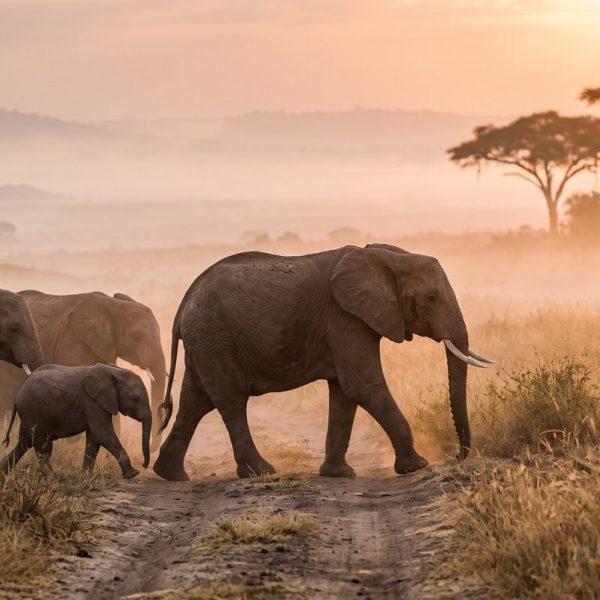
The phrase "endangered species" can feel like something that happens far away, to tigers and rhinos on another continent. In reality the list runs long and close to home, from bees and freshwater mussels to familiar birds whose numbers have quietly halved. Learning how to protect endangered species starts with a less comfortable fact: almost every threat they face traces back to human activity, which also means the solutions sit within human reach. This is a plain look at why animals slide toward extinction, what conservation actually tries to do, and where individual effort really fits in.
What puts a species at risk
A species becomes endangered when its population falls low enough that it may not recover on its own. The causes are well understood and depressingly consistent. Habitat loss is the biggest, as forests, wetlands and grasslands are cleared for farming, roads and cities. Climate change shifts the temperatures and seasons animals depend on, forcing them to move or perish. Poaching and the illegal wildlife trade strip out the rarest creatures for money. Pollution, invasive species and disease finish the job. Rarely is it a single blow. Usually it is several pressures stacking up until a population that once numbered in the millions can no longer hold on.
What the goal of wildlife conservation really is
Ask what the goal of wildlife conservation is and the honest answer is broader than saving a few charismatic animals. Conservation aims to keep whole ecosystems functioning, because species do not exist in isolation. A predator keeps grazing animals in check, those grazers shape the grassland, and the grassland stores carbon and feeds a food web that includes us. Protect the system and the individual species within it usually recover. Focus only on one animal while its habitat collapses and the effort fails. This is why modern conservation talks less about zoos and far more about land, water and the connections between them.
How to protect endangered species on a large scale
The serious work of how to protect endangered species happens through law, land and cooperation. National measures such as protected-area designations shield the places animals live. International agreements coordinate what no single country can manage alone, since animals and the trade in them cross borders freely. The Convention on International Trade in Endangered Species, better known as CITES, is negotiated among nations in several working languages, a reminder that this kind of global agreement leans heavily on the careful communication PoliLingua describes in its piece on the language of international diplomacy. Alongside treaties, hands-on wildlife conservation increasingly relies on cross-border science, shared monitoring data and restored corridors that let populations move as the climate shifts. None of it is glamorous, and most of it works slowly, but this is where genuine recoveries come from.
What one person can actually do
It is easy to feel that individual action is pointless against forces this large, but the aggregate matters. Supporting reputable conservation organisations funds the fieldwork and legal pressure that governments respond to. Choices at home count too: reducing pesticide use helps pollinators, keeping cats indoors spares birds, and refusing products tied to habitat destruction, such as uncertified palm oil, lowers the demand that drives clearing. Reporting injured or trafficked wildlife to the right authorities plugs people into the system that protects it. Voting and speaking up for habitat protection may be the most powerful lever of all, because the biggest decisions are political ones. No single act saves a species. Millions of them, pointed the same way, change what is economically and politically possible.
Species protection works when consumer demand shifts alongside legislation, since supply chains respond to buyers faster than to treaties. Cosmetics were an early proving ground for that, and much of the interest in natural beauty tips began with people reading ingredient lists for sourcing reasons. Curiosity about origin usually starts with something other than vanity.
The species that never make the poster
Conservation attention tends to follow charisma. Tigers, pandas and elephants raise money and headlines, while the animals doing the quiet heavy lifting in an ecosystem go unnoticed. Insects pollinate the crops people eat, amphibians signal the health of freshwater, and unglamorous fish hold entire marine food webs together. Many of these are vanishing faster than the famous mammals, and because few people rally to save a beetle or a mussel, they slip away with little protest. A serious approach to protecting biodiversity has to widen the lens beyond the poster animals, because an ecosystem is only ever as stable as its least noticed parts.
Protection efforts depend on international agreements that only function if the documentation holds up in each signatory country. Enforcement is administrative before it is practical. Conservation bodies encounter the same standards that govern a uscis translation whenever staff or specimens move internationally.
Reasons for measured hope
The picture is not uniformly bleak. Animals have been pulled back from the edge before, from the bald eagle to the humpback whale, when protection was strong and sustained. Authoritative trackers such as the IUCN Red List record recoveries alongside the declines, and reference overviews of endangered species document how targeted effort has reversed some of the worst trends. Recovery is possible, but it is never automatic. It takes protected habitat, enforcement that has teeth, and enough public will to keep funding the work after the headlines fade. The species most likely to survive this century are simply the ones people decide to keep.
Protecting endangered species is not a lost cause, but it is an unfinished one. The threats are human-made, which is the hard part and also the hopeful part, because it means the outcome is still ours to shape. Every acre of habitat kept intact and every rule enforced buys another generation the chance to recover. The animals cannot make that choice for themselves. We can.